A collision with a commercial truck can be an incredibly frightening experience. It’s a traumatic event that can upend your life in an instant. From the very beginning, these cases raise entirely different questions about liability, evidence preservation, insurance coverage, and the strict rules governing commercial carriers. Not only are the physical injuries often catastrophic, but the legal battles that follow are significantly more layered and fiercely contested than a standard car accident.
For injured individuals and their families in Atlanta, recognizing this difference early on is crucial. The actions you take in the immediate hours and days following a crash with a commercial vehicle directly impact your medical recovery, the preservation of vital evidence, and the ultimate strength of your legal claim. In this guide, the experienced semi-truck crash attorneys at The Cochran Firm Atlanta explain the necessary steps to take after a collision and detail exactly why these claims require a highly specialized legal strategy.
Even if you feel more shaken than injured initially, the massive impact of a tractor-trailer collision can cause internal injuries or trauma that may not fully come to light until days later. Protecting yourself physically also helps protect your legal rights. Here are the most important steps to follow:
Taking these initial steps is vital, but understanding why the legal landscape is so different is the next hurdle.
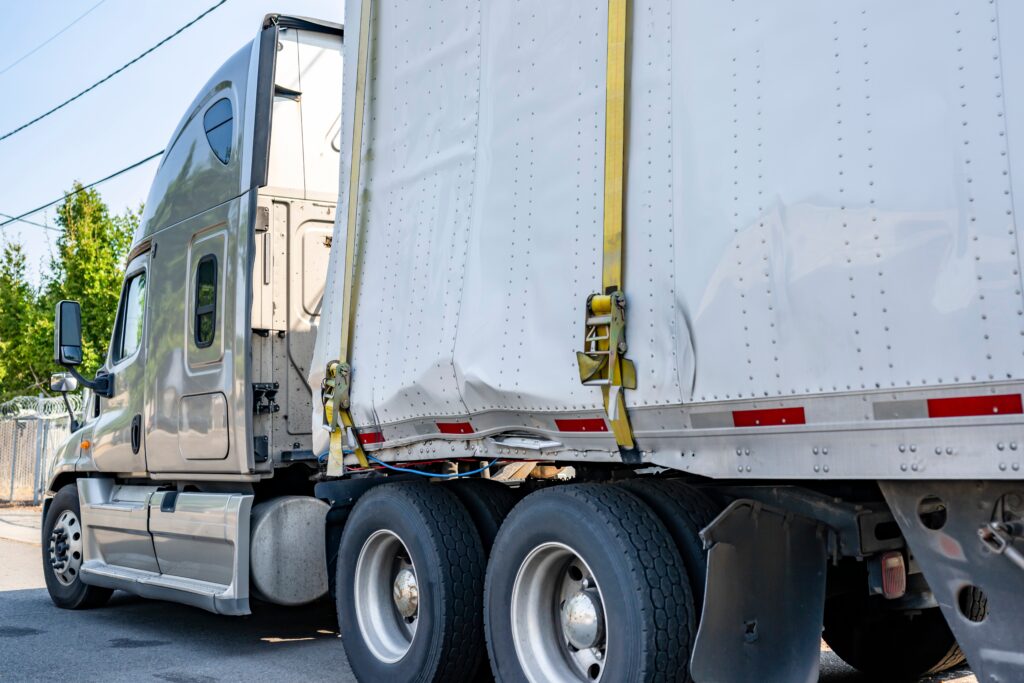
The most obvious difference between an 18-wheeler crash and a passenger car wreck is also the most legally significant: the sheer force involved. A fully loaded commercial vehicle can outweigh a standard car by up to 80,000 pounds. When that immense size and weight collide with a smaller vehicle, the resulting injuries are often severe.
This reality changes the legal approach entirely. A claim involving a traumatic brain injury, spinal cord damage, multiple fractures, or wrongful death cannot be evaluated the same way as a minor fender bender. Medical treatment may span months or years, and the injured person might never return to their previous career. Families are often thrust into a sudden role of caregiving, facing intense financial instability and long-term uncertainty.
Consequently, these claims involve extensive damages and attract intense scrutiny from defense teams. Insurers will actively challenge causation, question the necessity of future treatments, and fiercely debate the long-term financial impact the injuries will have on the victim's life.
In a standard car accident case, the main liability question is often relatively narrow: which driver caused the crash? In a commercial truck accident, that is sometimes only the starting point. The truck driver may have made a serious mistake, but the broader investigation often turns to whether a company or third party helped create the conditions that led to the collision.
A trucking company may be responsible for hiring an unqualified driver, failing to supervise safety practices, pressuring drivers to meet unrealistic schedules, or ignoring maintenance issues. In other cases, a separate maintenance contractor may have failed to properly inspect or repair the vehicle. A cargo-loading company may have contributed by overloading the truck or failing to secure the freight correctly. Depending on the facts, equipment manufacturers and other commercial actors may also come into the picture.
Identifying all potentially liable parties can change the direction of the entire case, including what records are pursued, how negligence is framed, and what compensation may ultimately be available. If an injured person assumes the case begins and ends with the driver, significant sources of accountability may be missed.
Commercial trucking operates under strict federal safety rules established by the Federal Motor Carrier Safety Administration (FMCSA). These regulations do not apply to ordinary passenger vehicles and cover critical areas such as hours of service, driver qualifications, mandatory inspections, drug testing, and meticulous recordkeeping.
After a crash, these rules become a roadmap for the investigation. They help establish what the driver and carrier were legally obligated to do, and more importantly, whether those safety duties were ignored.
Consider a crash caused by a fatigued driver. This scenario immediately raises questions about whether the driver complied with federal hours-of-service limits, took required rest breaks, and maintained accurate logs. A tire blowout might point directly to inadequate maintenance practices. In these situations, the case is not just about careless driving; it is about a regulated commercial entity failing to follow federal laws designed specifically to prevent catastrophic harm. Federal regulations provide the framework for proving negligence at both the individual and corporate levels.
Building a strong trucking case requires evidence that goes far beyond standard police reports and scene photos. Commercial truck crashes generate a wealth of technical data and corporate documentation. Evidence in these cases often includes:
This evidence is vital when the cause of the crash is disputed. For instance, black box data can contradict a driver's claim that they were braking, while dispatch records might uncover intense scheduling pressure from the carrier.
However, timing is critical. Federal law only requires trucking companies to retain certain records for a limited period, sometimes as little as six months. Electronic data can be easily overwritten. Because the trucking company controls this evidence, your legal team must act immediately to send spoliation letters, legally demanding the preservation of all relevant data before it disappears.
When a commercial truck crash causes serious harm, the insurance battle starts immediately. While an injured person is still in the hospital trying to understand what happened, the trucking company and its insurer are already reviewing records and building a strategy to limit their financial exposure. Early contact from a commercial adjuster may seem routine or even helpful — but it rarely is. Some common defense tactics include:
What makes this fight even harder is the size of the policies involved. Larger commercial insurance policies do not make a claim easier to resolve. The higher the financial exposure, the harder insurers tend to fight. That typically means deeper scrutiny of the victim's medical history and aggressive challenges to:
An insurer may not deny that a crash occurred, yet still dispute how seriously the victim was hurt or whether the truck crash caused a specific condition. Fair compensation in a serious truck accident case goes well beyond current medical bills, and every part of it will be contested.
Not every personal injury lawyer is equipped to handle a commercial trucking case. These claims require a working knowledge of federal safety regulations, the ability to investigate corporate conduct across multiple defendants, and the experience to go up against defense teams that protect high-value claims for a living. A general practitioner who handles fender benders is not the same as an attorney who has spent years litigating against commercial carriers.
Georgia-specific knowledge matters just as much. State deadlines, comparative fault rules, and procedural requirements can all shape the outcome of a claim, particularly when the defense tries to shift blame onto the injured person. Understanding how to connect federal FMCSA violations to a Georgia negligence claim is a skill that comes from doing this work repeatedly, not occasionally.
The Cochran Firm Atlanta has done exactly that. The firm is part of the national Cochran Firm network and has been recognized by Best Lawyers and U.S. News & World Report as a Metropolitan Tier 1 firm in Personal Injury Litigation. That recognition reflects a track record built on results in serious, high-stakes cases — including vehicle and trucking accident claims that resulted in outcomes like a $197 million jury verdict, a $100 million jury verdict, and a $51.4 million jury verdict. These are not outliers. They reflect what it looks like when a firm takes complex cases seriously and fights for full accountability.
When the claim involves catastrophic injuries, multiple liable parties, and an insurance defense team that started building its case before you left the hospital, you need attorneys who have been in that fight before and know how to win it.
If you were injured in a commercial truck accident in Atlanta, it is important to understand that these claims often involve far more than a basic insurance dispute. Unlike many car accident cases, trucking claims may involve multiple liable parties, federal safety regulations, specialized evidence, and aggressive insurance defense strategies.
The Cochran Firm Atlanta represents victims in complex trucking accident cases and understands the legal and practical issues that can shape these claims early. Whether the case involves serious injuries, long-term medical care, lost income, disputed responsibility, or evidence that needs to be preserved quickly, having the right legal team can make a meaningful difference in protecting your claim under Georgia law.
Below are answers to a few common questions people have after a serious truck accident.
They can be. Liability may involve more than one party, and the case may depend on technical evidence, company records, and federal trucking regulations that do not usually arise in a standard car accident claim.
Depending on the facts, liability may involve the truck driver, the trucking company, a maintenance provider, a cargo-loading company, or another third party connected to the vehicle or the trip.
Important evidence may include the police report, medical records, scene photos, witness statements, black box data, driver logs, maintenance records, inspection reports, dashcam footage, dispatch communications, and cargo documentation.
They can, especially when the injuries are catastrophic. Know that higher policy limits do not guarantee an easy result. Serious truck claims are often defended more aggressively because the financial exposure is greater.
As early as possible. Prompt legal guidance from an experienced truck accident lawyer can help protect your rights, preserve time-sensitive evidence, and reduce the risk of mistakes in dealing with insurers.